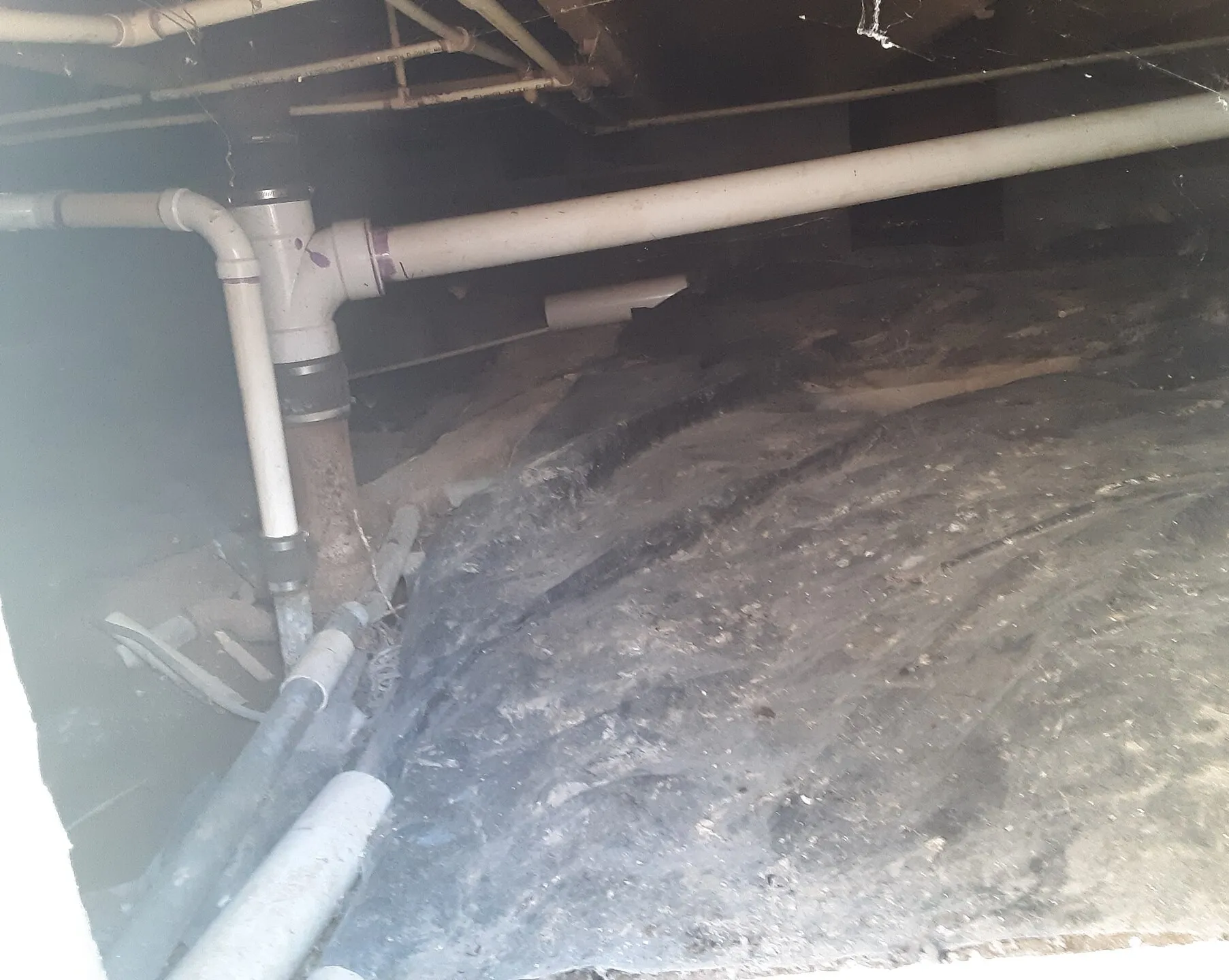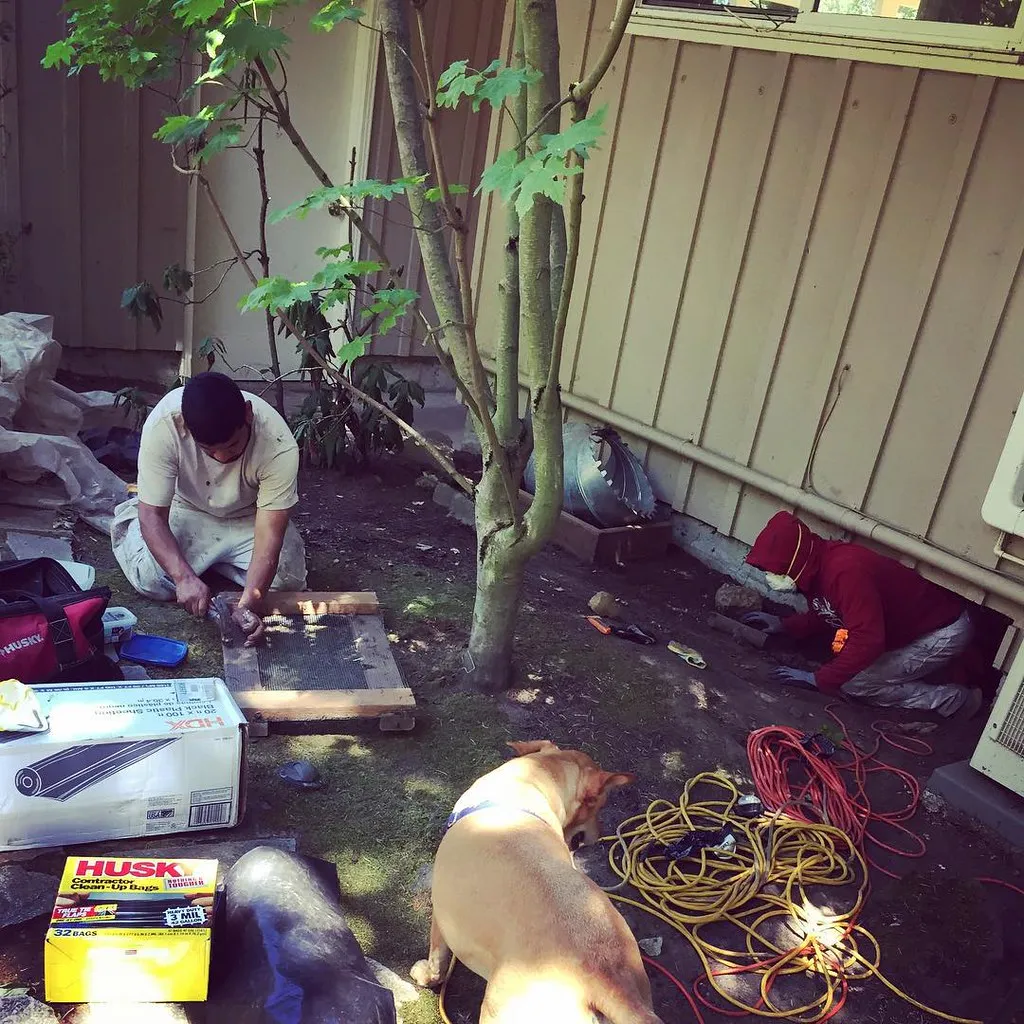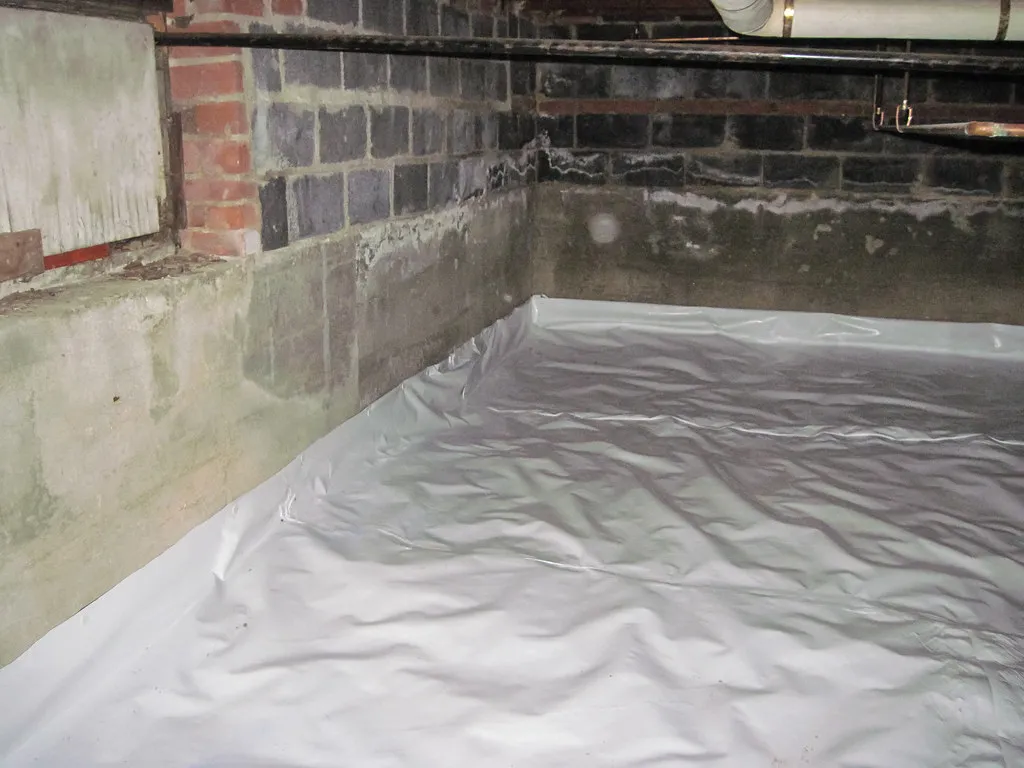
A crawl space vapor barrier is a plastic liner laid over the dirt under your house, overlapped and taped at the seams and carried up the foundation walls. You need one when the ground is bare, when old plastic has torn or slid into piles, or when the wood down there feels damp. We install liners on their own and as the first layer of a closed crawl space.
Is a liner alone enough?
It helps, but with the vents open it is often not enough in an Upstate summer. A liner stops moisture rising from the soil. It does nothing about humid outdoor air coming in through the vents.
A field study by Advanced Energy in Princeville, North Carolina, shows the gap. Its vented test houses already had a full 6-mil ground cover, and their crawl spaces still sat above 70% relative humidity for 98% of the summer. The closed crawl spaces in the same study were above 70% only 5% of the time.
Upstate air explains why. At Greenville-Spartanburg airport the mean July dew point is 67.6°F, and in summer the soil and framing under a house run cooler than that air. Let it in through the vents and the moisture settles on your joists.
A liner on its own still makes sense in some houses: a crawl space that stays fairly dry, a tight budget, or a first step before sealing the space later. Our guide on encapsulation versus a vapor barrier walks through when each one is the right call.
12 mil or 20 mil?
Our standard liner is 12 mil, and 20 mil is an upgrade at about $0.40 per sq ft. Twelve mil suits a crawl space that sees little traffic; 20 mil is worth it where people crawl over it often or things are stored on it.
Thicker plastic stands up better to knees, tools and the corners of storage boxes. Our guide to what mil vapor barrier a crawl space needs compares 6, 12 and 20 mil side by side.
What does code ask for?
For a closed crawl space, South Carolina’s code wants a continuous liner over the ground with seams lapped 6 inches and sealed or taped, and edges carried at least 6 inches up the stem wall, attached and sealed.
That is section R408.3 of the 2021 International Residential Code with SC modifications, which South Carolina has enforced since January 1, 2023. A closed crawl space also needs a way to dry the air, and a crawl space dehumidifier sized to the manufacturer’s specs is one of the options the code lists.
We install every liner the same way, sealed job or not: seams overlapped and taped, the liner carried up the walls and fastened.
How we do it
- We measure the crawl space humidity and the moisture in the wood before we quote.
- We clear debris and pull down any wet or fallen insulation.
- We roll out the liner, 12 mil unless you choose 20 mil, and overlap and tape every seam.
- We run the liner up the foundation walls and fasten it there.
- We stop short of the top of the wall to leave a termite inspection strip, so the wall and sill stay visible to your pest control company.
- On a full encapsulation, we also seal the vents and the access door, add a dehumidifier with a condensate drain and read the humidity again after it has run a few weeks.
What affects the price?
Mostly the floor area, then the liner thickness and how much has to come out first. Our ballpark is $2 per sq ft with a $1,500 minimum, which puts a 1,000 sq ft crawl space around $2,000–$2,750.
For comparison, Fixr puts a vapor barrier alone at $1,500–$4,000. These are the things that move our number:
- Size. The price follows the square footage of the crawl space floor.
- Thickness. The 20 mil upgrade adds $0.40 per sq ft.
- Cleanup. Debris, old plastic and fallen insulation take time to clear.
- Access. Low clearance, piers to cut around and ductwork in the way slow the work.
- Walls. Taller foundation walls take more liner to cover.
These are ballparks, not quotes. The firm price comes after we have been under the house.
Will a liner hide termite damage?
Not when the top of the wall is left open. That strip is where a termite inspector looks, so we keep it clear.
Talk to your termite company before any liner goes in, and keep your bond in force. Older houses in Westminster and Walhalla may still have bare dirt or thin, torn plastic underneath, so have a termite check done before the new liner covers anything up.
Want a number before anyone crawls under your house? Our crawl space estimator gives a ballpark for a liner-only job or a full system from a few questions, or you can call us to set up a visit in Seneca or anywhere in Oconee County.