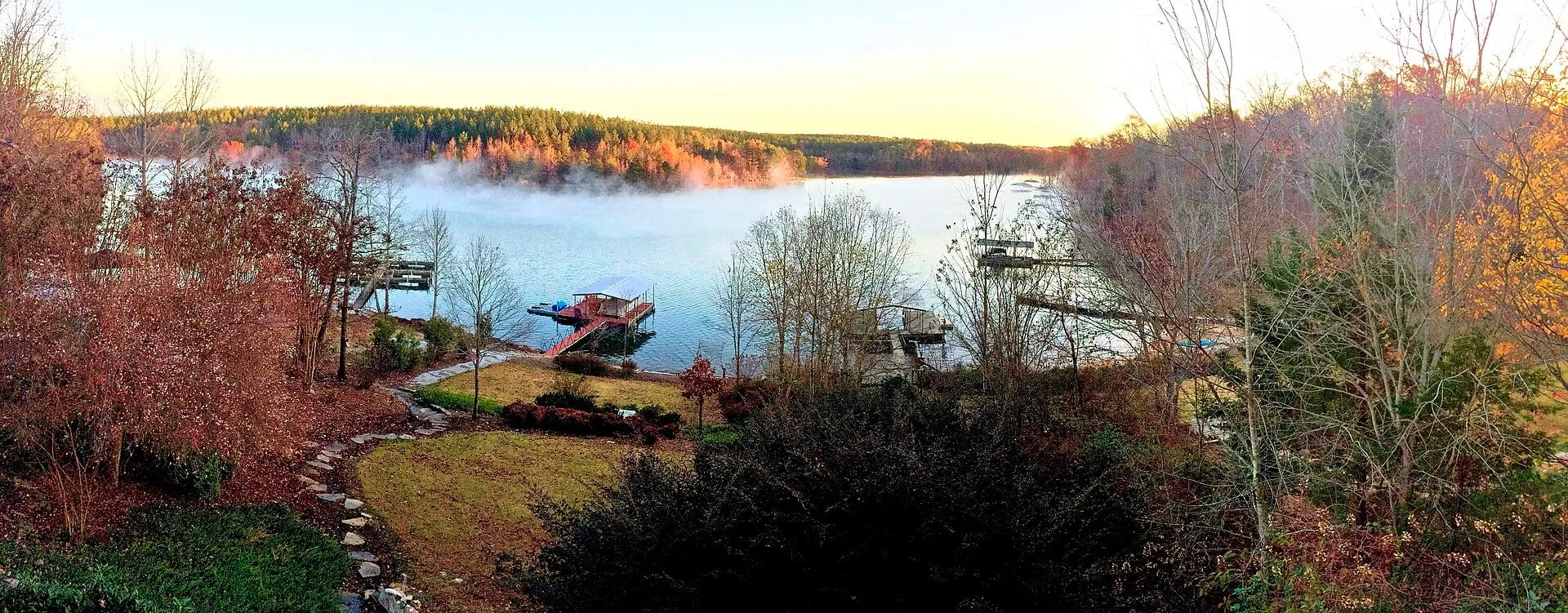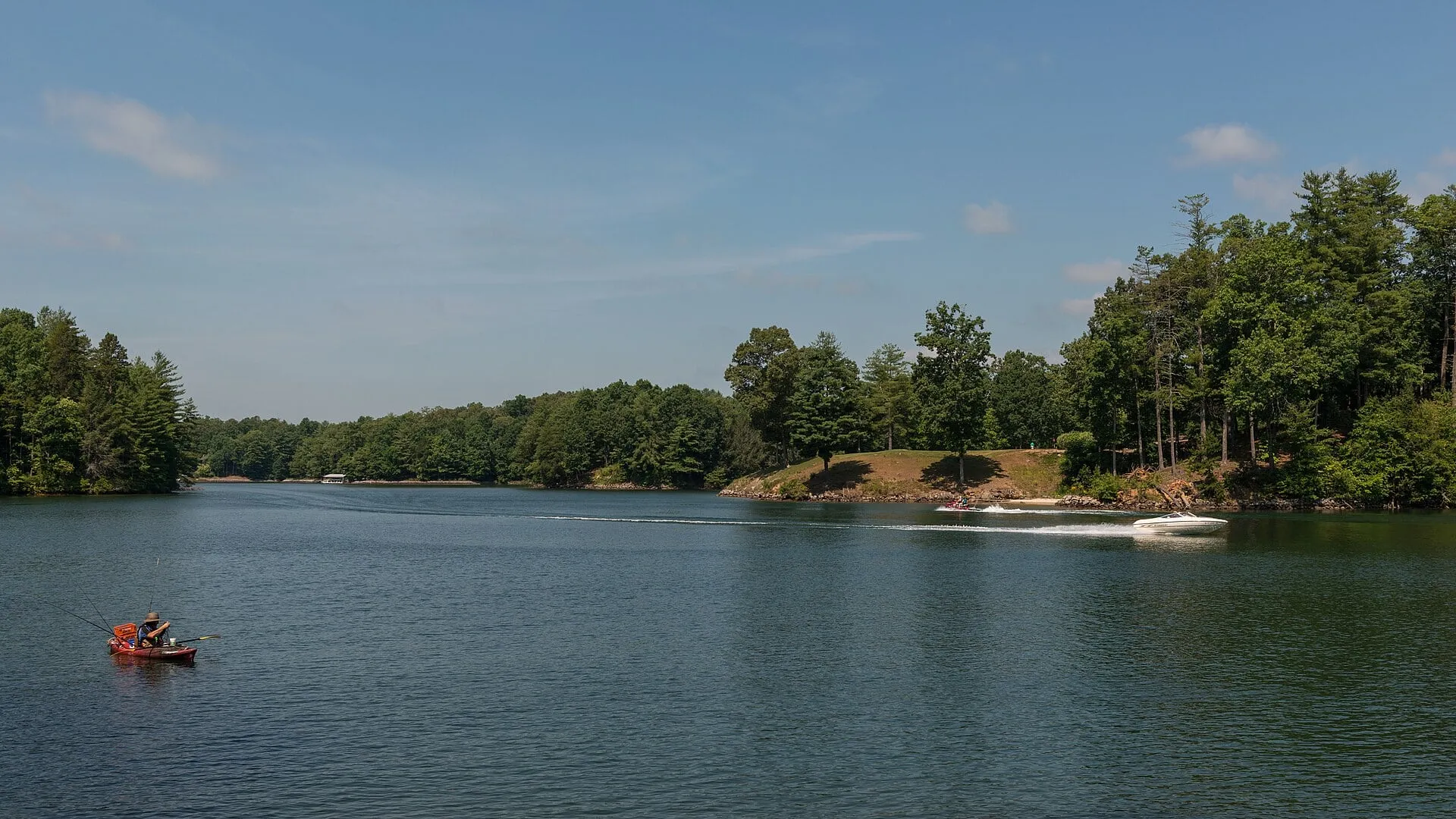
Lake Keowee is Duke Energy’s lake, impounded in 1970 and 1971 (lake history), and its water cools Oconee Nuclear Station. Homes around it commonly sit on sloped lots, and they tend to be newer than Seneca’s: around Keowee Key the median year built is 1990 (American Community Survey via Census Reporter).
How does a slope push water under?
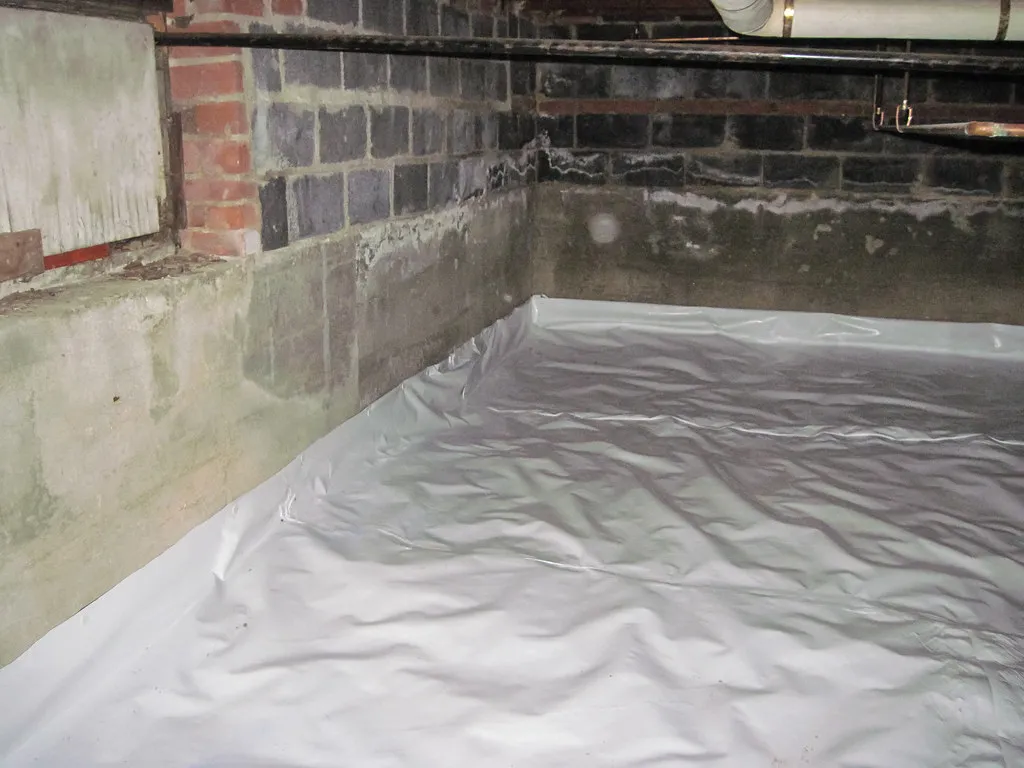
Through the clay. Upstate red clay is weathered rock that drains slowly, so on a hillside the rain that soaks in tends to travel along the top of the clay toward whatever sits downhill. On a lake lot, that is often the house. The uphill foundation wall takes the water, and the crawl space floor beside it is where it tends to pool.
A newer house doesn’t escape this. Building codes cover the liner and the drying system for a closed crawl space, but nothing in a code can change which way the hill runs.
What about walk-out lots?
They have the same problem with a deeper wall. A walk-out lot puts one side of the foundation at ground level and buries the other in the hill, so the buried side holds back water like a dam, and that water looks for a way through.
Fix the outside first: gutters, downspouts carried well past the house, and soil that falls about 6 inches in the first 10 feet wherever the slope allows (ENERGY STAR closed crawl space guide). Water that still gets in goes to an interior drain line and a sump pump; see our crawl space drainage and sump pump service.
Is a closed-up lake house at risk?
Yes, and it’s a common pattern at the lake. A second home sits shut for weeks in July and August, nobody is there to notice the crawl space, and the first sign is a musty house on the next visit. All that time the outdoor air carries a mean dew point of 67.6°F in July and 67.2°F in August (NOAA normals at Greenville-Spartanburg), and an open vent lets it under the floor.
A sealed crawl space with a crawl space dehumidifier keeps working while you’re away. EPA advises keeping indoor relative humidity below 60% (EPA mold and moisture guide), and we read the crawl space again after the system has run a few weeks to confirm it’s holding. Our guide to crawl space humidity levels explains what those readings mean.
What does a lake house job cost?
Price the water work separately. A drain line and sump pump for the uphill side is about $2,200 as an allowance, on top of the encapsulation itself, which our estimator puts at $6,650–$9,200 for a 1,500 sq ft crawl space with a 12 mil liner and a dehumidifier. These are ballpark ranges, not a quote, and we set the firm price after measuring under the house.
We also work in Salem, about 14 miles north of Seneca, and all around the lake. If you live at Keowee full-time or only come up on weekends, ask for an estimate or call, and tell us when you’re away so we can plan access.