For most crawl spaces, a 12 mil liner is the sensible choice: tough enough to survive people crawling over it, without the extra cost of 20 mil. Six-mil polyethylene is the common minimum for a ground cover, and 20 mil earns its price when the crawl space gets regular traffic, storage or a rough floor. Thickness buys durability. It is not what keeps the space dry.
What does mil mean?
A mil is a thousandth of an inch. So 6 mil is 0.006 inch, 12 mil is 0.012 inch and 20 mil is 0.020 inch. Six mil is the clear plastic sheeting sold in rolls at any hardware store. Twenty mil is noticeably heavier and stiffer, and you feel the difference the first time you drag it across a crawl space floor.
What is the code minimum?
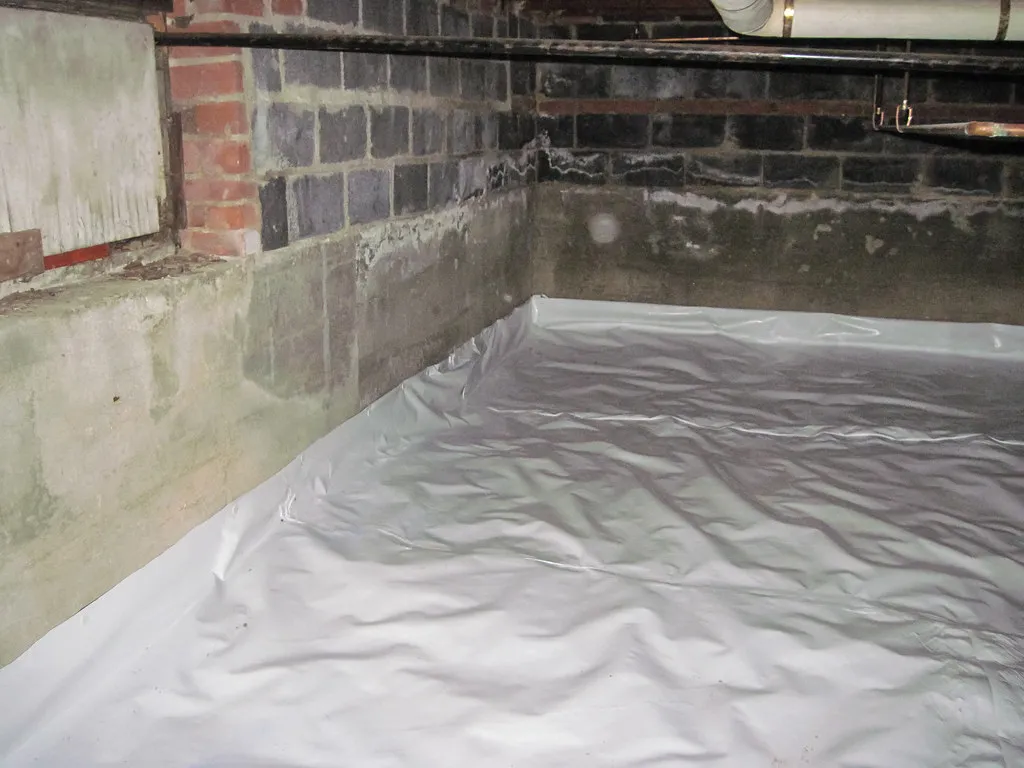
Six-mil polyethylene is the common minimum for a ground cover. For a sealed, unvented crawl space, South Carolina’s code (the 2021 International Residential Code with state modifications, section R408.3) asks for a continuous vapor retarder over the ground, with joints lapped 6 inches and sealed or taped, and edges carried at least 6 inches up the stem wall and attached and sealed (SC Reg. R-8-1221).
Those are the sealing details. A minimum is a floor, not a recommendation, and a sheet that tears the first time a plumber crawls over it is no longer continuous.
How do 6, 12 and 20 mil compare?
| Thickness | Good for | Weak spot |
|---|---|---|
| 6 mil | A ground cover in a crawl space nobody enters | Tears and punctures under knees, tools and rocks |
| 10 or 12 mil | Most sealed crawl spaces; 12 mil is our standard | Can still puncture on sharp debris left underneath |
| 20 mil | Regular foot traffic, storage or a rough floor | Costs more: about $0.40 a sq ft over 12 mil with us |
What changes as it gets thicker?
Mainly how well it stands up to punctures, tears and traffic.
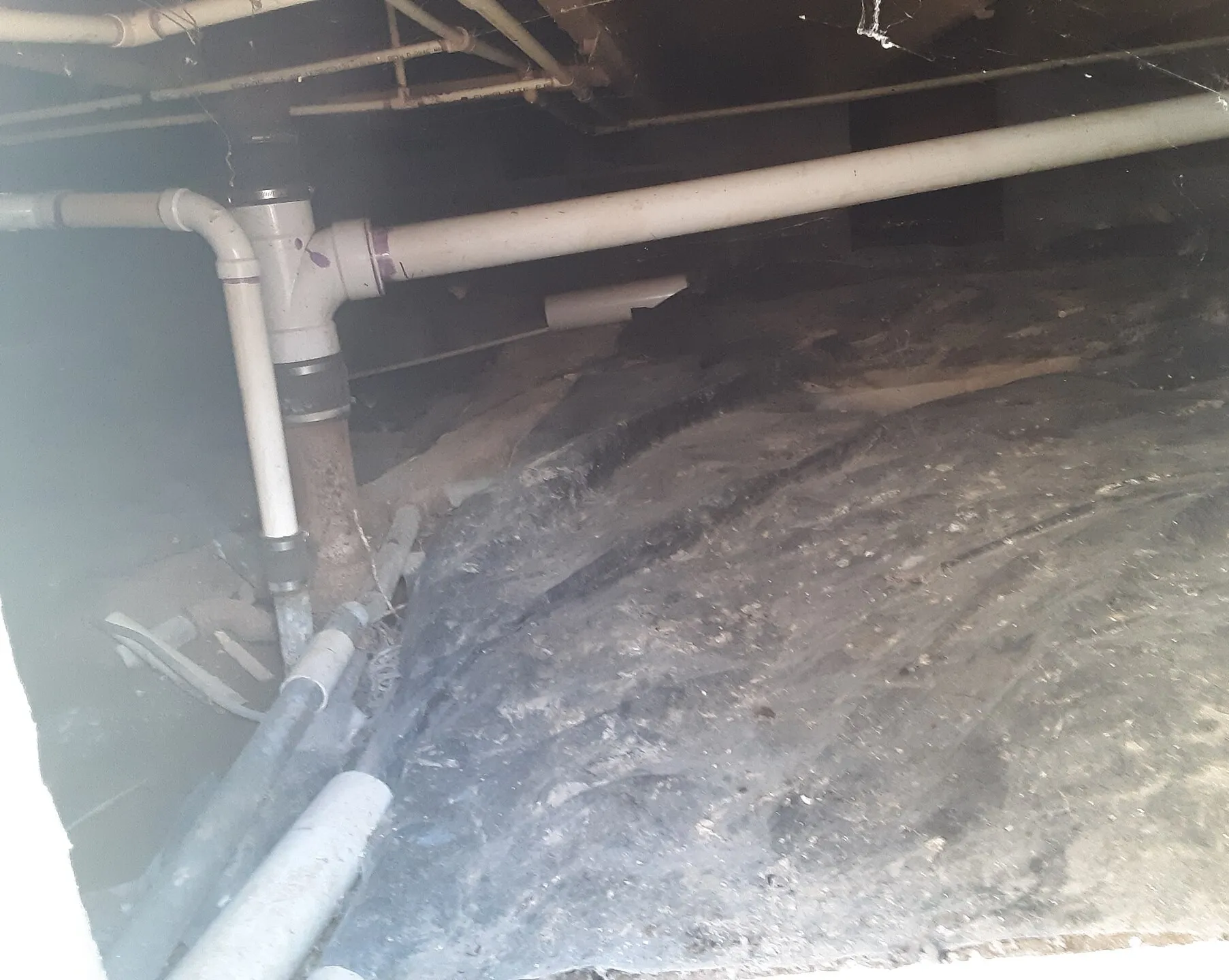
- Puncture and tear resistance. A crawl space floor is rarely smooth. Roots, stones, broken brick and scraps of lumber press up from below, and dry red clay can be lumpy and hard. A thicker sheet takes more to pierce.
- Foot traffic. Plumbers, HVAC techs and termite inspectors will crawl across the liner for as long as you own the house. Every trip means knees, elbows and tool bags dragged over the plastic.
- Storage. If you plan to keep anything down there, boxes and bins get pushed in and pulled out. That is where 20 mil makes the most sense.
- Cost. Going from our standard 12 mil to 20 mil adds about $0.40 a square foot of floor. Our encapsulation cost guide has the full picture.
On a sloped lot, like many around Keowee and Hartwell, a crawl space can be tall at the downhill wall and tight at the uphill end. The tight end is where people end up on their stomachs, and where a liner takes the most wear.
What is a reinforced liner?
It is a liner with a woven mesh or cord built into the plastic. The reinforcement stops a puncture from running into a long tear. A small hole in a liner is easy to patch with tape, while a long tear is not. When you compare liners, ask whether a sheet is reinforced, not just how many mils it is.
Does a thicker liner keep it drier?
Not on its own. The vented houses in the Advanced Energy field study had a full 6-mil ground cover and still sat above 70% relative humidity for 98% of the summer. The plastic was not the weak point. The humid air coming through the vents was, and a thicker sheet would not have kept that air out.
What keeps a crawl space dry is the rest of the job: taped seams, the liner fastened up the walls, sealed vents and a dehumidifier. Our comparison of encapsulation vs. a vapor barrier covers that.
Can I install it myself?
Yes. A ground cover is a reasonable DIY job if you can handle the crawling. A few things make the difference:
- Clear the floor first. Rake out rocks, roots and debris so they don’t punch through later.
- Fix water first. A liner over standing water just traps it. Gutters, downspout extensions and grade that drops about 6 inches over the first 10 feet from the house come first (ENERGY STAR). If water still gets in, see our page on crawl space drainage and sump pumps.
- Lap and tape the seams. Follow the code wording above: 6-inch laps, sealed or taped, and edges at least 6 inches up the wall.
- Leave the top of the wall open. Termite inspectors need to see it. Read our guide to termites and the CL-100 before you fasten anything to the walls.
- Leave the vents alone unless you are also adding a way to dry the air.
If you would rather not spend a weekend on your stomach in the dirt, our crawl space vapor barrier installation runs about $2 a square foot with a $1,500 minimum, or roughly $2,000–$2,750 for 1,000 square feet.
For a ballpark on your own crawl space, use our estimator or give us a call.