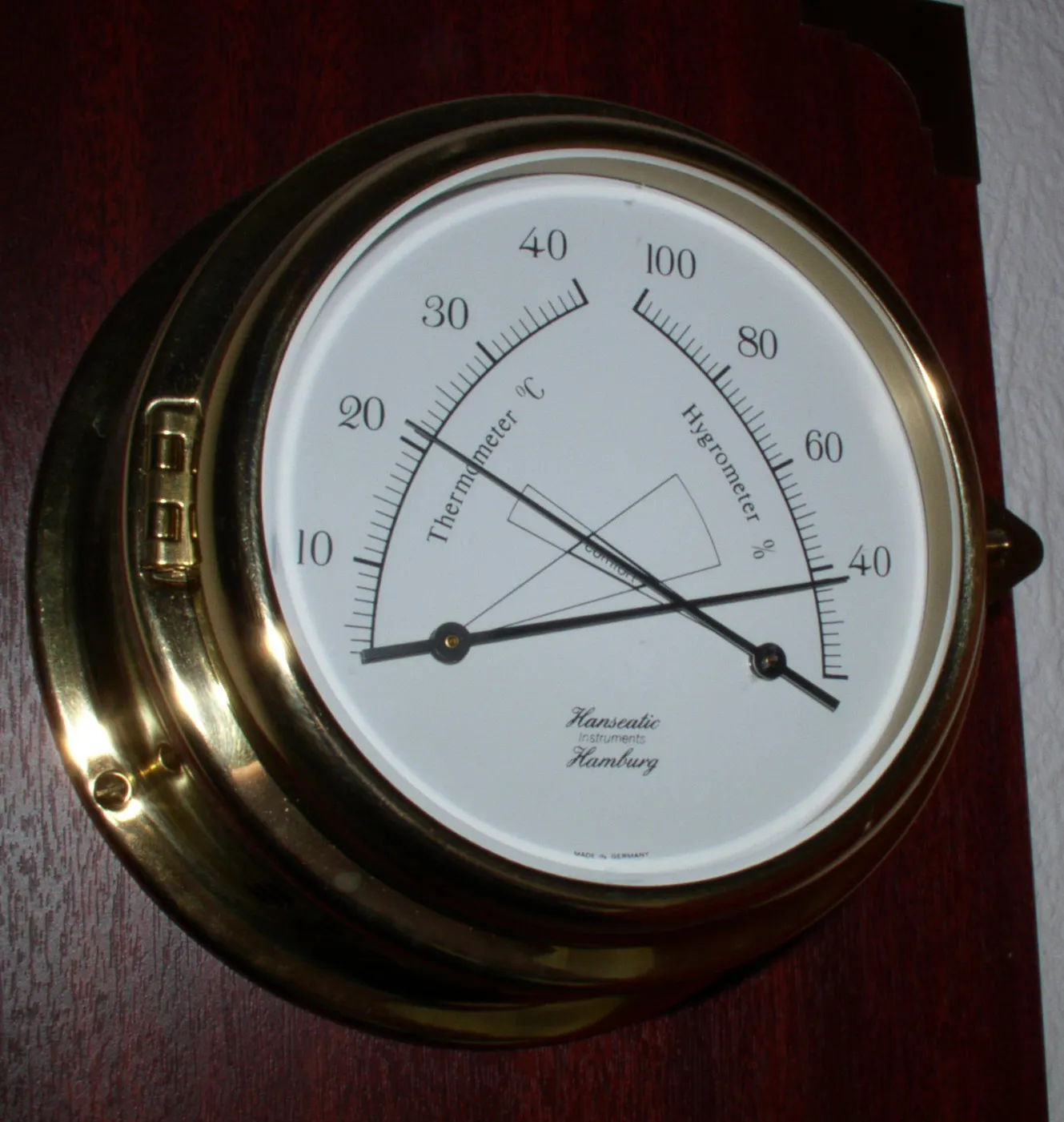
Keep crawl space humidity under 60%, the ceiling the EPA sets for indoor air. Readings that sit above 70% through the summer are too high, and wood moisture of 20% or more is what a South Carolina CL-100 report calls excessive moisture. A cheap hygrometer will tell you where your crawl space stands.
What humidity should a crawl space be?
Under 60% relative humidity. Closed crawl space dehumidifiers are commonly set between 50% and 60%, and the targets from the main sources sit in the same range:
| Measure | Target | Source |
|---|---|---|
| Indoor relative humidity | Below 60%, ideally 30–50% | EPA |
| Closed crawl space design target | 60% daily average | Advanced Energy |
| Installer humidity guarantees | Typically 70% or lower | ENERGY STAR |
| Wood moisture, to never see mold | Below 16% | Building Science Corporation |
| Wood moisture, to never see rot | Below 19% | Building Science Corporation |
| CL-100: excessive moisture | 20% or more | SC Reg. 27-1085 |
| CL-100: active decay conditions | 28% or more | SC Reg. 27-1085 |
Air humidity and wood moisture are two different numbers. The air reading tells you the conditions right now. The wood reading tells you what those conditions have done to the framing over time.
How do I measure it?
With a cheap digital hygrometer from the hardware store, set where it reads crawl space air rather than the doorway.
- Put it a few feet in from the access door, off the dirt and away from any vent.
- Leave it at least a day before trusting the number. A model that records the daily high and low is worth paying a little more for.
- Check in July and August. At Greenville-Spartanburg airport the mean dew point is 67.6°F in July and 67.2°F in August (NOAA), and summer is when vented crawl spaces are wettest.
- Take a reading outside or upstairs at the same time to compare.
A cheap hygrometer is not a lab instrument, so watch the trend over a week or two rather than any single reading. Some come with a wireless sensor, which saves a crawl every time you want a number.
For the wood, a pin-type moisture meter pushed into a joist or the sill plate gives a reading in percent. We take both readings, humidity and wood moisture, before we quote.
What do the readings mean?
| Crawl space reading | What it means |
|---|---|
| Under 60% | Where you want it. |
| 60% to 70% | Borderline. Keep watching it, and check the wood. |
| 70% to 80% | Too high for long stretches. The vented crawl spaces in the Advanced Energy study were above 70% for 98% of the summer. |
| Over 80% | Wet. Those same vented crawl spaces were above 80% for 86% of the summer and repeatedly reached condensation conditions. |
Relative humidity depends on temperature. Summer crawl space soil and framing are cooler than the outdoor air (Building Science Corporation), and air with a dew point near 67°F that cools to 67°F reaches 100%. That is why a crawl space can read far wetter than the yard on the same July afternoon. Our guide on whether crawl space vents should be open or closed explains what that means for venting.
Can you skip the dehumidifier?
You can skip the dehumidifier, but not the drying. South Carolina’s code, section R408.3, lets a sealed crawl space use any one of these (SC Reg. R-8-1221):
- continuous exhaust at 1 cfm per 50 square feet of floor
- conditioned supply air at 1 cfm per 50 square feet
- a plenum, in existing structures
- dehumidification sized to the manufacturer’s specifications
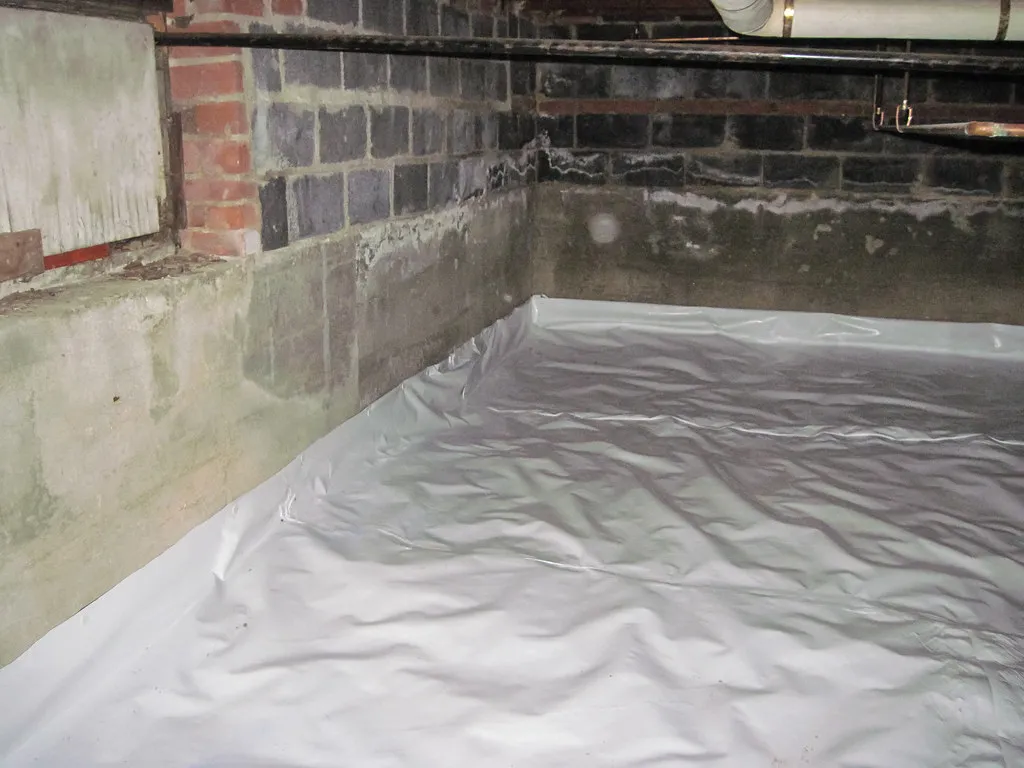
What does not work is a liner on its own. The vented houses in the Advanced Energy study had a full 6-mil ground cover and still sat above 70% almost all summer. A dehumidifier on its own in a vented crawl space fights the outdoor air, so seal the space first. Our crawl space dehumidifier installation page covers the machine and its condensate drain.
What if my readings are high?
Look for water before anything else. Standing water, wet soil after rain or a drip from a pipe will keep any crawl space damp, and our drainage and sump pump page covers that fix. Then check the gutters, downspouts and grade outside. ENERGY STAR advises soil that drops about 6 inches over the first 10 feet from the house.
If the house smells musty too, our guide to a musty smell from the crawl space walks through what else to check.
Once the water is handled, high readings usually mean the crawl space needs sealing and drying. Try our estimator for a ballpark, or call us and we will measure the humidity and wood moisture before we quote.